When Specified Resilient Channel Was Unavailable: How RC-1 Boost® Helped Keep a Project Moving
Construction projects rarely go exactly according to plan.
Materials become unavailable. Design requirements evolve. Inspectors raise questions. And when those challenges involve acoustical assemblies, finding an alternative isn’t simply a matter of substituting one product for another.
The alternative needs to maintain the project’s performance requirements while also satisfying the structural, fire, and code requirements of the assembly.
A recent project involving Crescent Communities demonstrates how technical support and the right sound isolation solution can help keep a project moving when unexpected challenges arise.
The Project
Crescent Communities is a nationally recognized real estate investor, developer, and operator of mixed-use communities. The company develops multifamily and commercial communities in some of the fastest-growing markets in the United States.
For this project, the team was working with:
- Architect: 505 Design
- Acoustical Consultant: SLR Consulting
- Sound Isolation Solution: PAC RC-1 Boost®
The project included acoustical requirements that called for a specified resilient channel as part of the floor/ceiling assembly.
But the specified product wasn’t available.
That created the first major challenge.
Challenge #1: The Specified Resilient Channel Was Unavailable
When the contractor went to obtain the proprietary resilient channel specified for the project, the material was unavailable.
Rather than allowing the material shortage to bring construction to a standstill, the contractor reached out to the project team to identify an appropriate alternative.
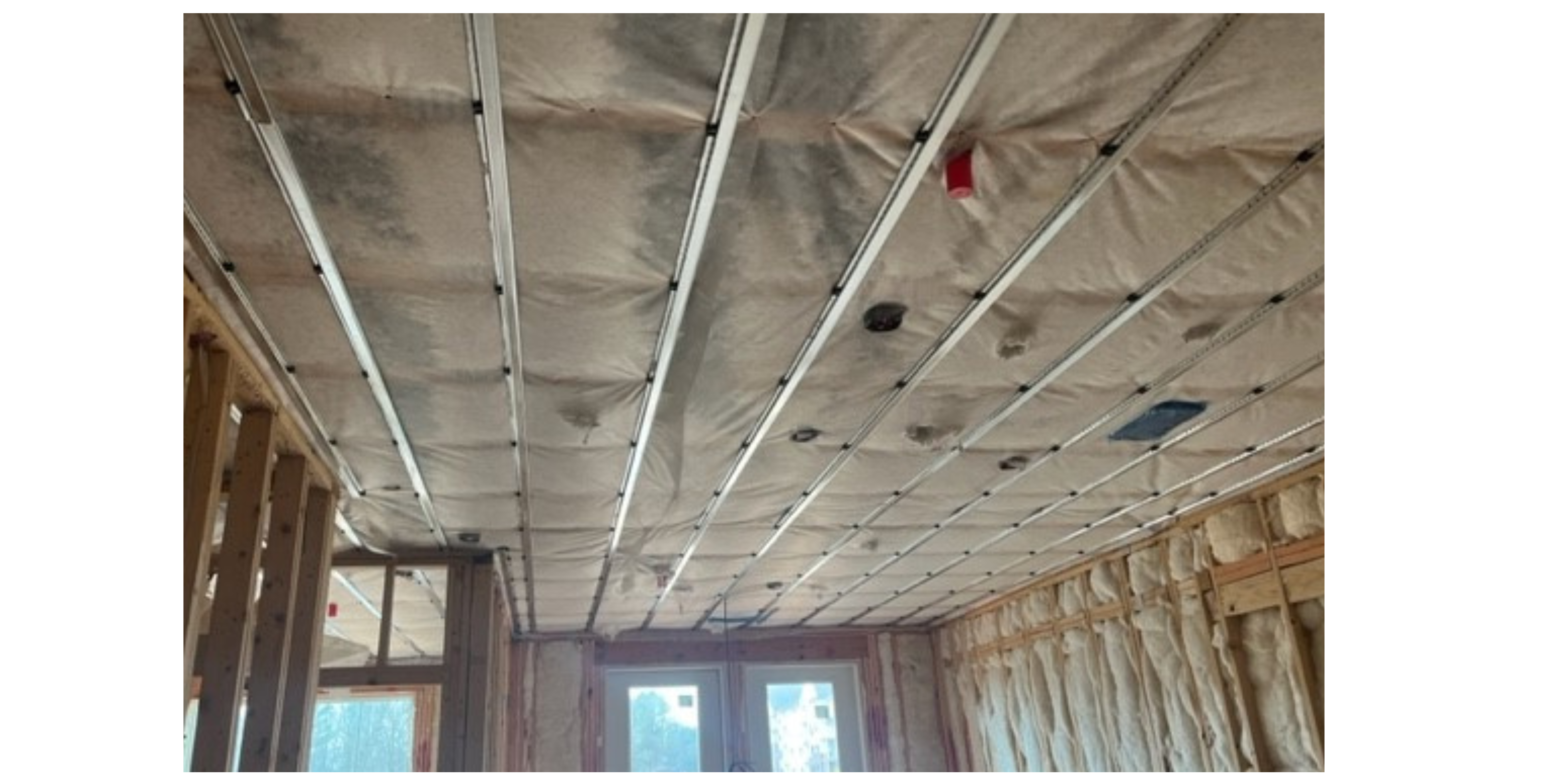
Nick Block of SLR Consulting, the project’s acoustical consultant, recommended using the PAC RC-1 Boost® with the resilient channel that was available.
This provided the project team with a way to continue construction while maintaining the acoustical performance goals of the assembly.
Finding an Alternative Without Losing the Acoustical Goal
Material substitutions can create significant concerns in acoustical construction.
A component that appears similar from a construction standpoint may perform very differently when incorporated into a tested or engineered acoustical assembly.
That’s why the solution wasn’t simply to find another product that could physically replace the unavailable channel.
The team needed an approach that addressed the project’s sound isolation requirements.
The RC-1 Boost provided that option.
By combining the RC-1 Boost with the available resilient channel, the project team was able to move forward with an acoustical isolation strategy that addressed the project’s performance goals.
Challenge #2: The Building Inspector Raises a Question
Solving the material-availability issue wasn’t the end of the story.
After the RC-1 Boost was installed, the project encountered another challenge during the first building inspection.
The building inspector questioned the use of the RC-1 Boost with the lightweight gypsum board being used on the project.
The concern stemmed from the inspector’s interpretation of a relatively new UL design associated with the project’s floor/ceiling assembly.
At that point, the project was facing another potential delay.
PAC International Gets Involved
Crescent Communities immediately reached out to PAC International for assistance.
Rather than leaving the project team to navigate the issue on its own, PAC worked directly with UL to address the inspector’s concerns.
The goal was straightforward:
Provide the documentation necessary to demonstrate that the assembly could be approved as designed.
PAC coordinated with UL to obtain the documentation needed by the project team and building inspector.
That support helped resolve the issue and allowed the project to continue moving forward.
More Than a Product
This project illustrates an important part of PAC International’s approach to sound isolation.
A product is only one part of a successful acoustical solution.
Construction projects can involve complicated interactions between:
- Acoustical requirements
- Building codes
- Fire-rated assemblies
- Structural requirements
- Tested designs
- Material availability
- Inspection requirements
- Installation conditions
When one part of that equation changes, the solution often requires more than simply selecting a different product.
It requires technical knowledge and collaboration between the manufacturer, contractor, acoustical consultant, architect, testing agency, and building officials.
The RC-1 Boost® as a Project Solution
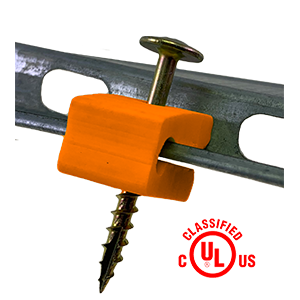
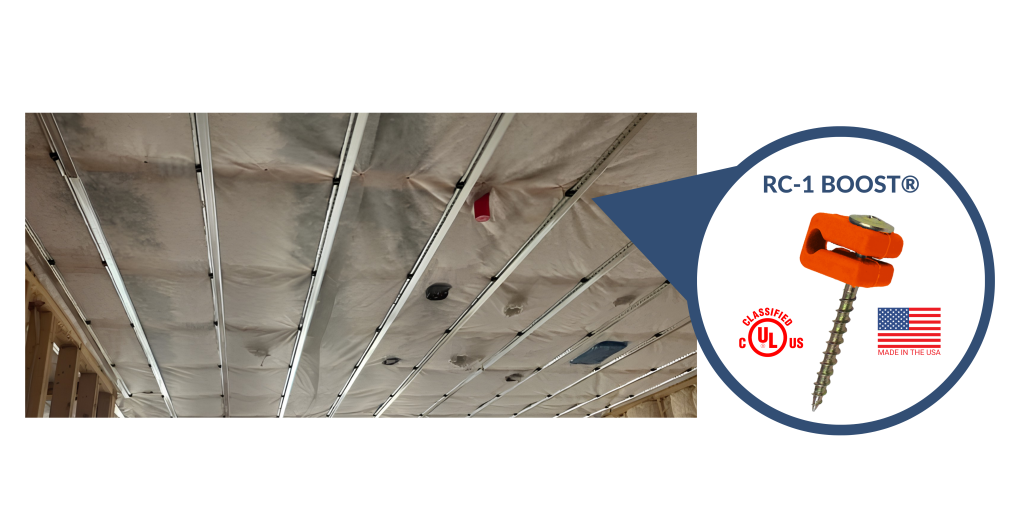
The RC-1 Boost® was developed to provide a practical resilient isolation solution for construction assemblies.
In this project, its value went beyond simply being an alternative product.
The RC-1 Boost® gave the project team another option when the specified resilient channel wasn’t available, while PAC’s technical support helped address the subsequent inspection question.
That combination—product performance plus technical support—helped keep the project moving.
Why Technical Support Matters
Acoustical products don’t exist in a vacuum.
A product may be installed correctly and still raise questions when it is incorporated into a particular tested or listed assembly.
That’s why technical support can be just as important as the product itself.
In this case, PAC didn’t simply provide the RC-1 Boost and walk away.
When the building inspector raised concerns, Crescent Communities contacted PAC, and PAC worked directly with UL to obtain the documentation required to address those concerns.
As Zach Ciambotti, Project Manager at Crescent Communities, said:
“Mike jumped on as soon as we reached out and started working on it coordinating with UL to get us the letter we needed.”
He also noted:
“Customer service was great and appreciated.”
Keeping Construction Moving
The biggest lesson from this project is that construction challenges don’t always require starting over.
When an specified product becomes unavailable, an acoustically appropriate alternative may be possible.
When an inspector raises a question about an assembly, documentation and technical coordination may help resolve the issue.
And when both happen on the same project, having a manufacturer willing to work directly with the project team can make a significant difference.
Real Solutions in Construction
At PAC International, we understand that construction projects are built in the real world.
That means dealing with material availability, installation challenges, design changes, inspections, and unexpected questions along the way.
Our goal is to provide more than sound isolation products.
We provide real solutions in construction.
The RC-1 Boost project with Crescent Communities is one example of how PAC’s products and technical support can work together to help solve unexpected challenges and keep projects moving.
Have an Acoustical Challenge?
Whether you’re dealing with an unavailable material, a challenging assembly, or questions about acoustical performance, PAC International can help evaluate your options.
Contact PAC International to discuss your project and find a sound isolation solution that works.
Learn more about the RC-1 Boost® and explore PAC International’s sound isolation solutions for your next project.
This week’s post highlights a case study in which PAC International’s RC-1 Boost allowed Crescent Communities to achieve the project’s required acoustical performance and keep the build on schedule when the specified resilient channel was not available; read HERE.
#Innovation #build #architect #design #business #noisecontrol #noisereduction