Double-Stud Partitions and Sound Isolation
Double-stud partitions are often recommended when high levels of sound isolation are required. With two separate sets of studs and a large air cavity between them, these assemblies can provide excellent acoustic performance.
But what happens when another building requirement—such as structural shear strength—changes the design?
A recent condominium project demonstrates why acoustical performance should always be evaluated alongside structural and fire requirements.
The Challenge: Sound Complaints Between Condominium Units
A condominium developer used double-stud partitions between adjacent units. Based on the Gypsum Association’s GA Manual, the architect expected the wall assembly to provide sound isolation exceeding STC 50.
However, the property manager began receiving complaints about sound transmission between units.
The project’s building materials supplier recommended that the developer contact PAC International for assistance.
When the Wall Assembly Doesn’t Match the Reference
For double-stud partitions, the GA Manual identifies standard assemblies that can provide strong sound isolation between dwelling units.
For example, GA File No. WP 3112 lists a typical double-stud wall with an STC rating of approximately 55 to 59.
However, the walls on this project included an important additional component: wood sheathing installed within the airspace between the two sets of studs.
Wood sheathing is commonly used to provide shear strength in load-bearing walls. Its impact on acoustical performance, however, can easily be overlooked—and it is not accounted for in many standard reference assemblies.
That seemingly small difference had a significant effect.
The Impact of Wood Sheathing on STC
The wood sheathing created a much smaller air cavity between the two wood layers.
Instead of functioning as two largely independent stud walls separated by a large airspace, the assembly introduced an acoustic condition that significantly reduced its ability to isolate sound.
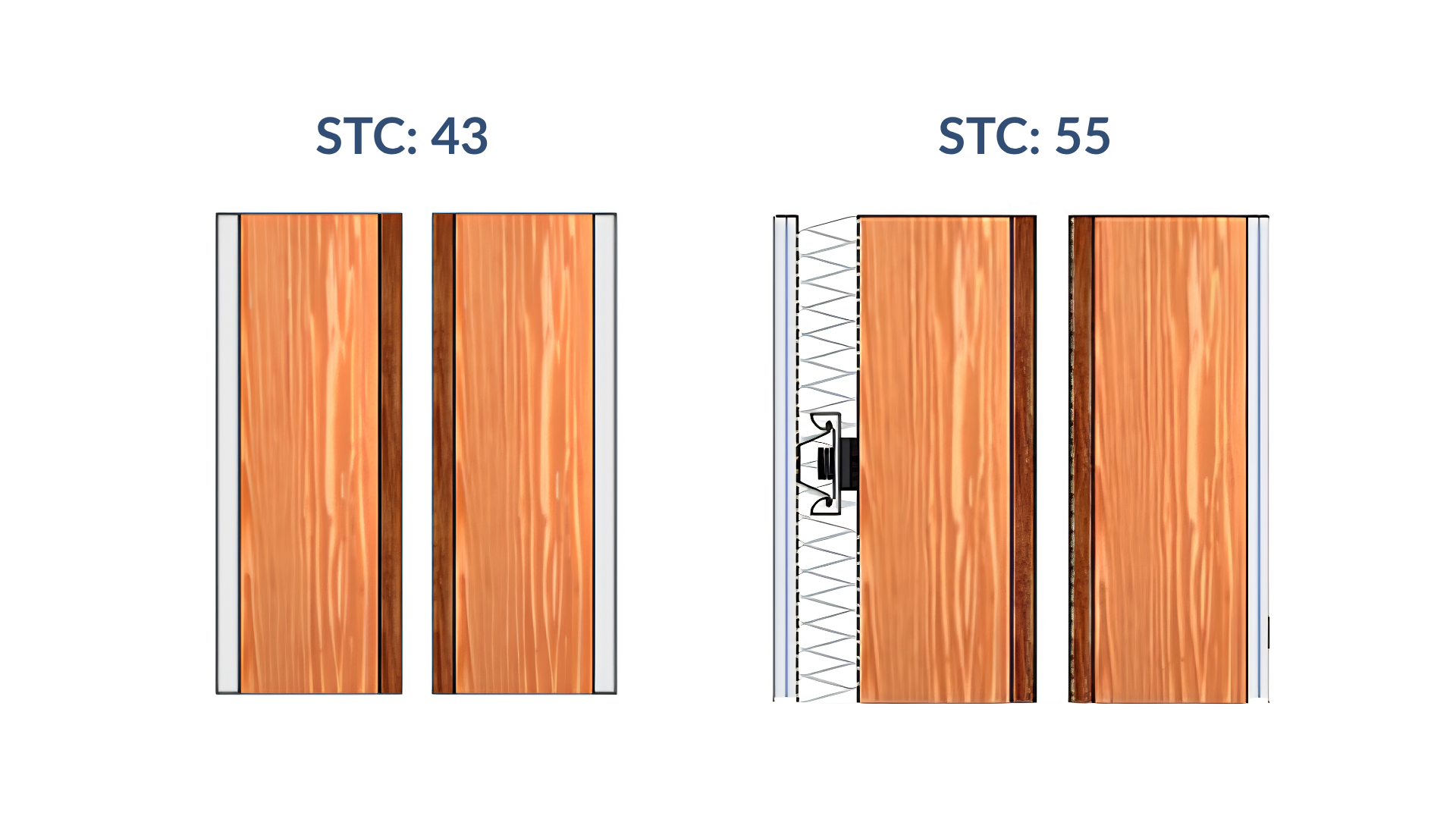
Testing showed that the inclusion of wood sheathing reduced the wall’s performance from the expected STC 55–59 range to STC 43.
That is a substantial drop—and importantly, STC 43 is below the code minimum of STC 50 for separating walls between dwelling units.
It is also well below the level of sound isolation typically desired in condominium construction.
Improving the Assembly
To bring the wall back to the intended level of acoustical performance, additional sound isolation was required.
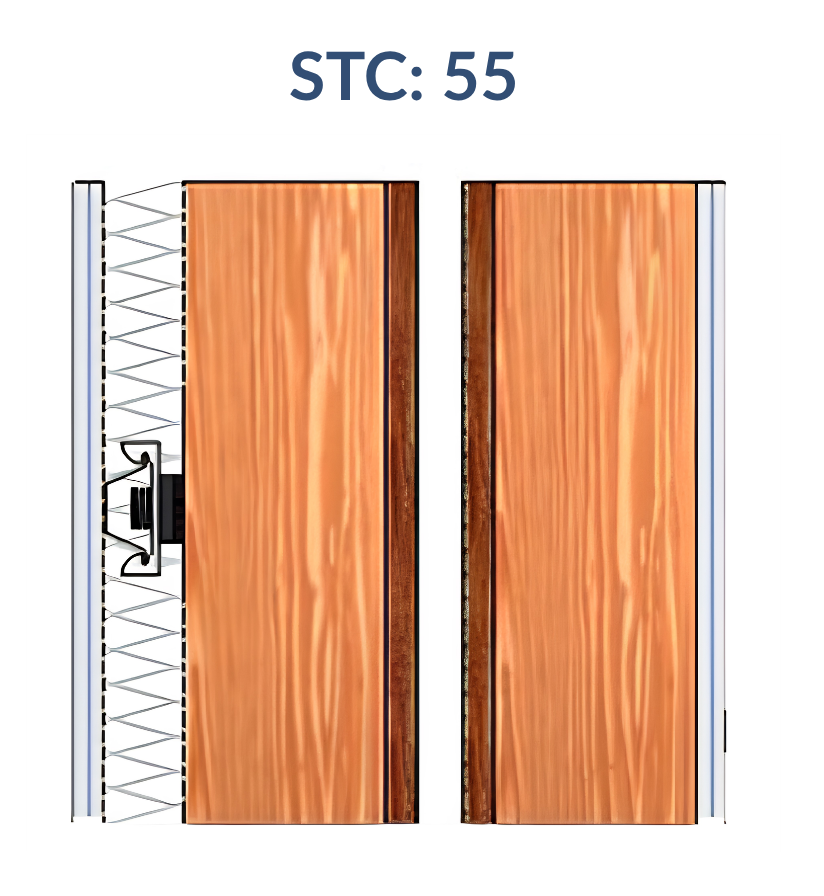
For this double-stud partition, adding the PAC RSIC-1 to one side of the assembly increased performance to approximately STC 50.
The performance can be increased further by adding additional layers of gypsum board.
Another option is to use QuietRock ES in place of Type X gypsum board.
These solutions demonstrate an important principle: when an assembly’s acoustic performance is compromised by another design requirement, the solution may require strategically adding sound isolation rather than simply relying on the published performance of a standard assembly.
Acoustics Don’t Exist in a Vacuum
When designing wall or floor/ceiling assemblies for acoustical performance, it is critical to consider the other requirements placed on the assembly.
Structural requirements, fire-resistance requirements, shear panels, penetrations, connections, and other construction details can all significantly affect the acoustical performance of an assembly.
A wall that looks similar to a tested or published assembly may perform very differently when one component or construction detail changes.
The lesson is simple: don’t design acoustics in isolation from the rest of the building.
Understanding how structural and fire requirements interact with acoustical design can help avoid costly sound-control problems after construction—and help ensure that the finished assembly delivers the performance occupants expect.
More Testing to Come
Stay tuned for additional test data on other wall assemblies designed to address the challenge of shear panels within a wall.
The upcoming data also includes a particularly interesting example involving the effects of the 8-dB rule, a topic currently generating significant discussion within ASTM.
Many thanks to PABCO® Gypsum for partnering with PAC International on this testing.
Looking For Better Sound Isolation?
The right sound isolation strategy starts with understanding how every component of an assembly affects performance.
Explore PAC International’s RSIC® solutions to see how resilient sound isolation can help improve wall and floor/ceiling assemblies.
Ready to find the right solution for your project? Connect with PAC International today.